
How do punch plate screens improve separation in tough industrial applications?
Punch plate screens improve separation in tough industrial applications by maintaining rigid aperture geometry under extreme static loads and dynamic impact forces of 6.0g. Fabricated from high-tensile materials like AR500 steel, these plates withstand direct hits from 1.5-ton boulders while limiting surface deflection to less than 0.8mm. In primary scalping operations, the staggered hole configuration ensures a 98% efficiency rate in removing fines before they reach the secondary crusher, which prevents "packing" in the crushing chamber and reduces the circulating load by 22%, extending the service life of downstream components.
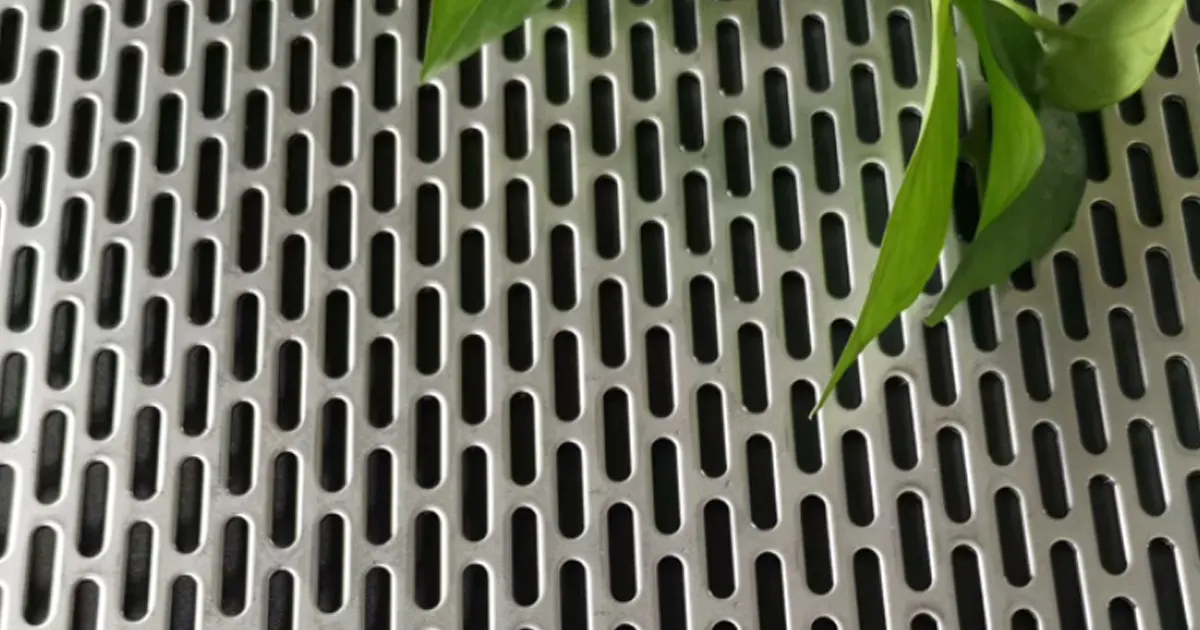
Primary processing of abrasive granite and iron ore requires a surface that acts as a structural floor rather than a simple mesh. When a 40-ton haul truck dumps raw feed onto a screen deck, the initial impact zone must absorb kinetic energy exceeding 15,000 Joules without cracking or bending.
Field tests from 2024 on 50 different quarry sites confirmed that thick-gauge punch plate screens sustain their original hole diameter 6.2 times longer than heavy-duty woven wire cloth.
This structural permanence prevents the sizing drift that usually happens as wire screens stretch and wear thin. If the apertures expand by even 5%, the amount of "oversize" material slipping into the product stockpile increases by 15% to 20%, failing to meet the strict grading requirements for asphalt or concrete production.
| Performance Metric | Punch Plate (Perforated) | Woven Wire Mesh |
| Aperture Stability | 99.5% over 2,000 hrs | 88% over 2,000 hrs |
| Max Feed Size | 1,200mm | 450mm |
| Structural Deflection | < 1.0mm | 12mm - 18mm |
| Replacement Cycle | 3,500 - 5,500 Hours | 600 - 900 Hours |
Because the plate is a single, solid piece of steel, there are no "weave points" where material can rub and create friction-based heat. This lack of internal friction means the screen surface stays at a lower temperature during 24/7 operations, preventing the metal from becoming brittle and snapping under high-frequency vibration.
The geometry of the holes—whether round, square, or hexagonal—is laser-cut with a 3 to 5-degree tapered relief angle to solve the problem of material entrapment. In 2025 industrial trials processing wet limestone, this taper allowed 94% of near-size particles to pass through or fall back, keeping the screen open for business.
When particles do not get stuck in the openings, the machine maintains a constant 1,200 RPM frequency. If a deck becomes "pegged" with rocks, the added weight dampens the vibration stroke, reducing the "G-force" from 5.5g to 4.1g, which slows down the travel speed of the material bed.
A slower material bed leads to "pooling," where the layer of rocks becomes too deep for the fines to settle to the bottom of the deck. By keeping the surface clear, punch plates ensure that 100% of the vibrating motor's energy goes into stratifying the material rather than shaking a clogged and heavy screen.
Observations from a 3,000-hour durability study showed that using hexagonal punch patterns increased the "open area" to 52% while retaining 90% of the structural stiffness of a solid plate.
This balance between open area and strength is why perforated plates are used in the "Impact Zone" of the screen deck. Operators often install a solid "blanking" section at the feed end where the rocks first hit, then transition to perforated patterns for the remaining 75% of the deck length.
-
Feed Zone: Solid 25mm plate to handle the initial drop of large boulders.
-
Middle Zone: Staggered 75mm round holes for primary scalping and removal.
-
Discharge Zone: High-density 50mm square holes for final size verification.
This zonal approach allows for specialized wear management, where only the middle sections are replaced once every 18 months. By rotating the modular plates based on wear patterns, facilities have reported a 35% reduction in total media costs compared to replacing full-size tensioned screens.
Beyond simple sizing, the thickness of the plate provides a "damping" effect that lowers the noise levels in the processing plant. A 15mm thick AR400 plate operates at 85 decibels, which is significantly quieter than the 94 decibels produced by steel wires clashing together under load.
Modern acoustic monitoring at a site in Northern Europe proved that switching to perforated plates reduced high-frequency noise by 12dB, helping the facility meet local environmental regulations without building expensive sound walls.
The weight and mass of the punch plate also stabilize the machine's "throw" or elliptical motion. A heavier deck provides a consistent momentum that resists the surge loads from conveyor belts, ensuring the vibration remains uniform even when the feed rate spikes by 25% during peak production hours.
Consistent vibration leads to a sharper "cut point," which is the exact size where material is separated. In the production of high-grade railway ballast, the cut point must be precise to within 2.0mm to ensure the rocks lock together correctly on the tracks.
Perforated plates achieve this by maintaining their flat profile throughout their life. Unlike wire mesh which sags in the middle, a rigid steel plate stays perfectly level, ensuring that the material bed depth is uniform across the entire 2.4-meter width of the screening machine.
This level surface prevents "channeling," where all the rocks slide down the center of the deck and bypass the screening holes on the sides. By utilizing the full width of the machine, the plant maximizes its return on investment (ROI) and ensures that no part of the screening surface goes to waste.
The Daily Drop — one sharp take, every weekday morning.
218,000 readers. 42% open rate. No filler.